Introduction
As an owner and an art director in Designer & Gentleman Chicago based digital agency my job was to help HLC to create a new solution for submitting a request for electrical service. I worked tightly with Boris Jankovic, UX/UI designer to create a unique solution. The app we created simplifies the process, and in just three steps helps customers to send a service request.
Chilight App
Case:
ChiLight
Date:
March 8th, 2019
Creative Direction
Logo Design
UX/UI
Prototyping
UX/UI:
Boris Jankovic
Nikola Vucicevic
Photography:
Shutterstock
The problem
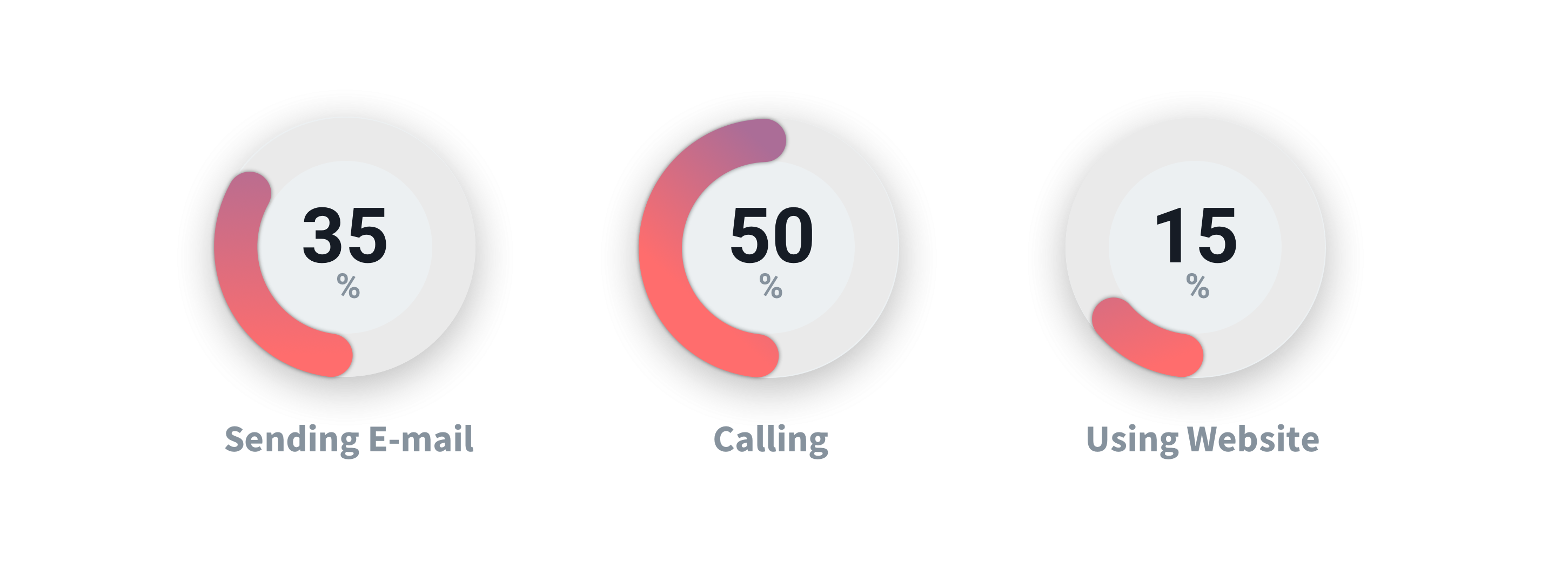
Usually, requesting for electrical service is not an easy process, either sending an email, either making a phone call is a complicated process for end users as they need to type or thoroughly describe the problem. Using a website to submit a request is also not an easy process and not intuitive for some end users. We approached this problem from a unique perspective wanting to bring something new to the market and really help users to make this process as smooth as possible.
Competitive analysis
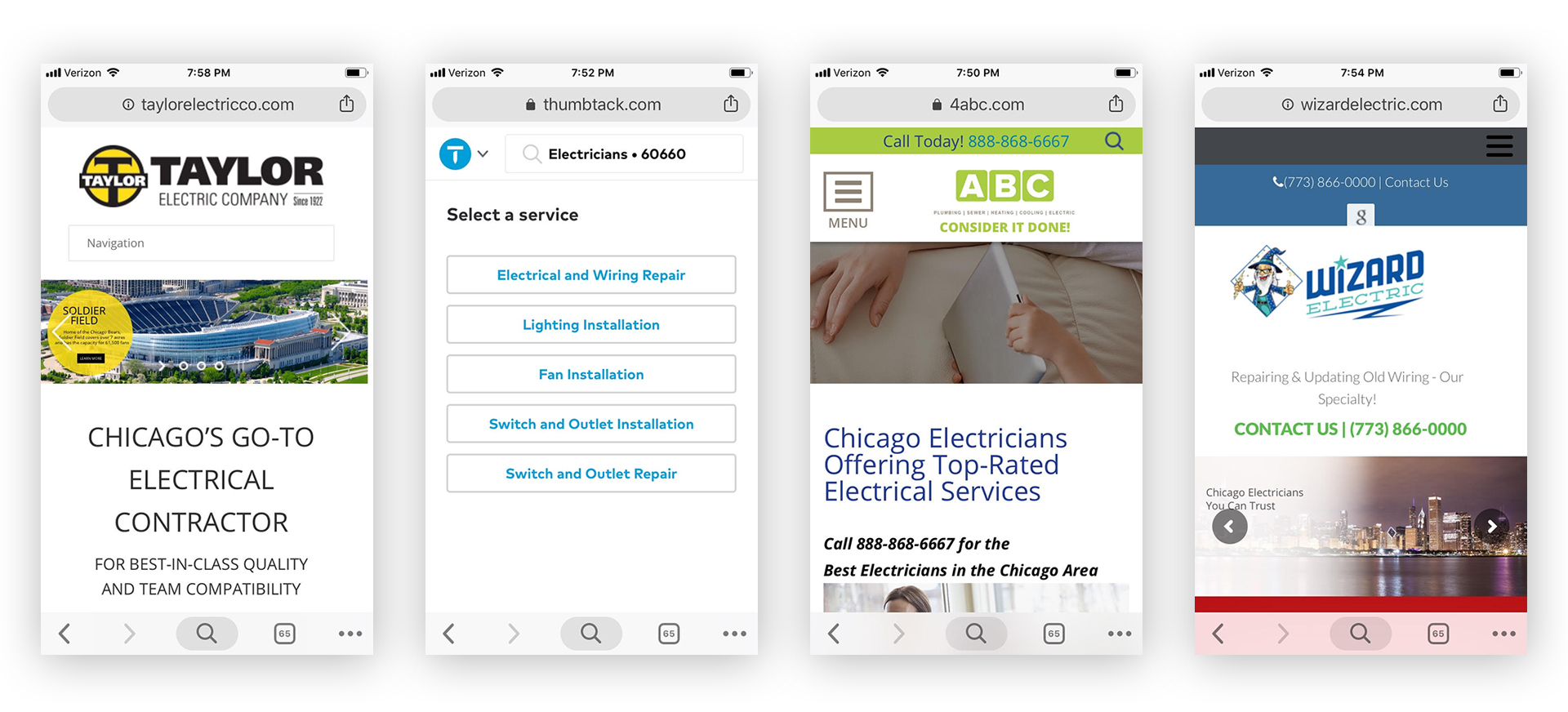
We used Competitive analysis to collect and review information about rival companies. It’ was an essential tactic for finding out what our competitors are doing and what kind of threat they represent. We came to the conclusion that an app would make a difference as a powerful competitive advantage.
Heuristic evaluation
Heuristic evaluation is a usability engineering method for finding usability problems in a user interface design, thereby making them addressable and solvable as part of an iterative design process.
Red routes
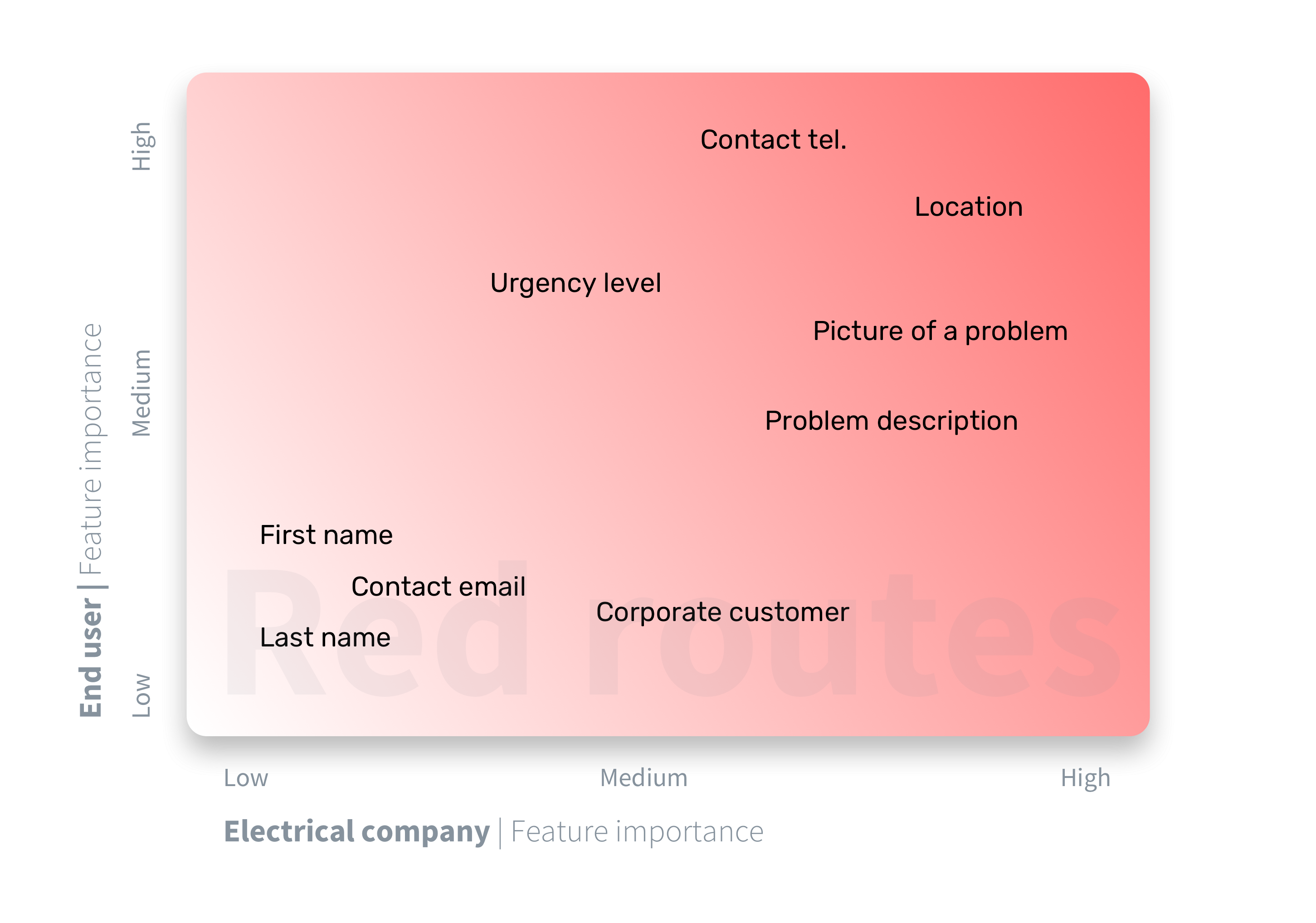
We approached this project very seriously and we created the red routes to check what elements of a service request are the most important for users. Red Routes which improve client satisfaction are shown in the picture below:
User journey map
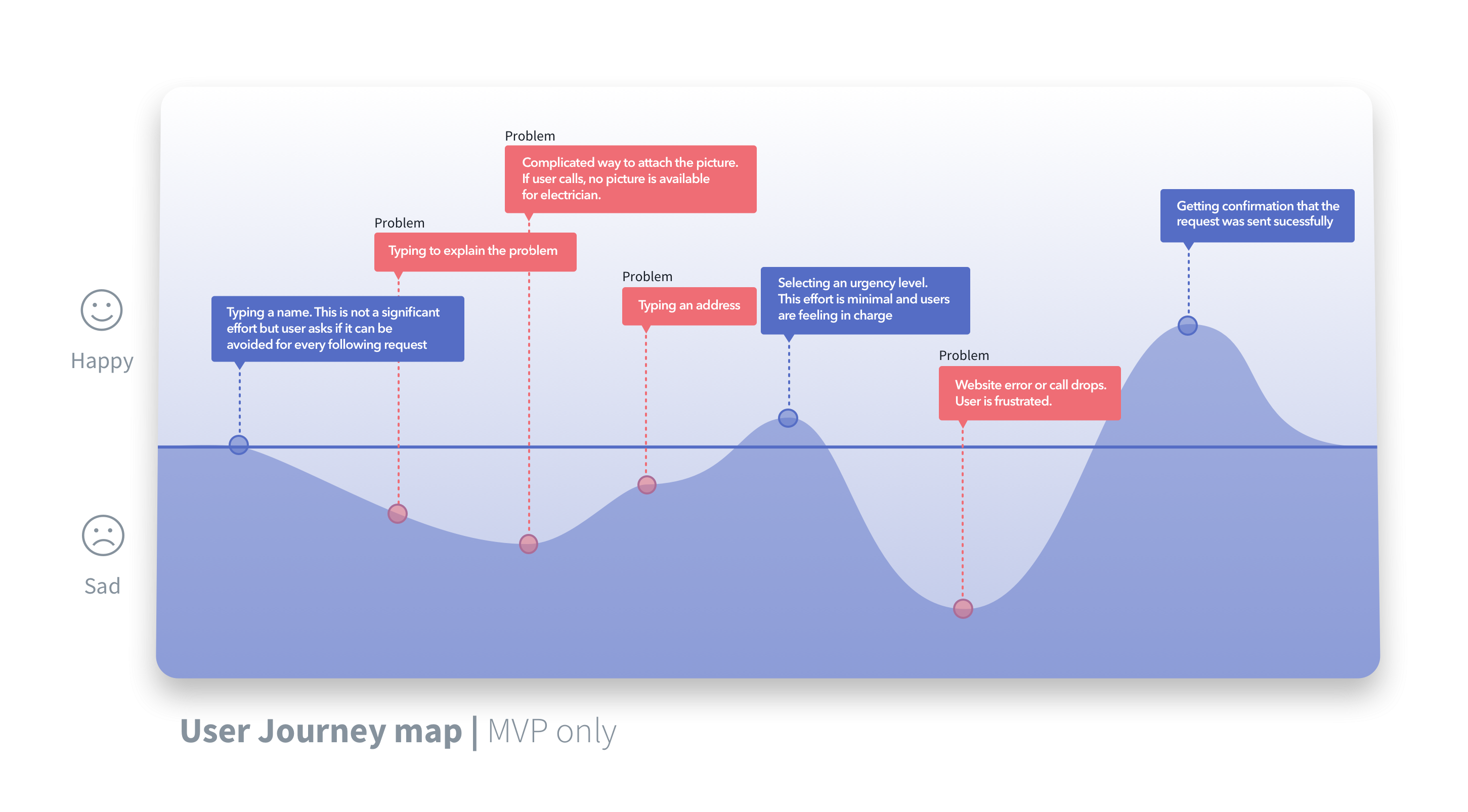
We wanted to see how the end user journey affects users emotions, and to see which steps that are needed to complete the fully documented service report create most frustrations.
User Personas
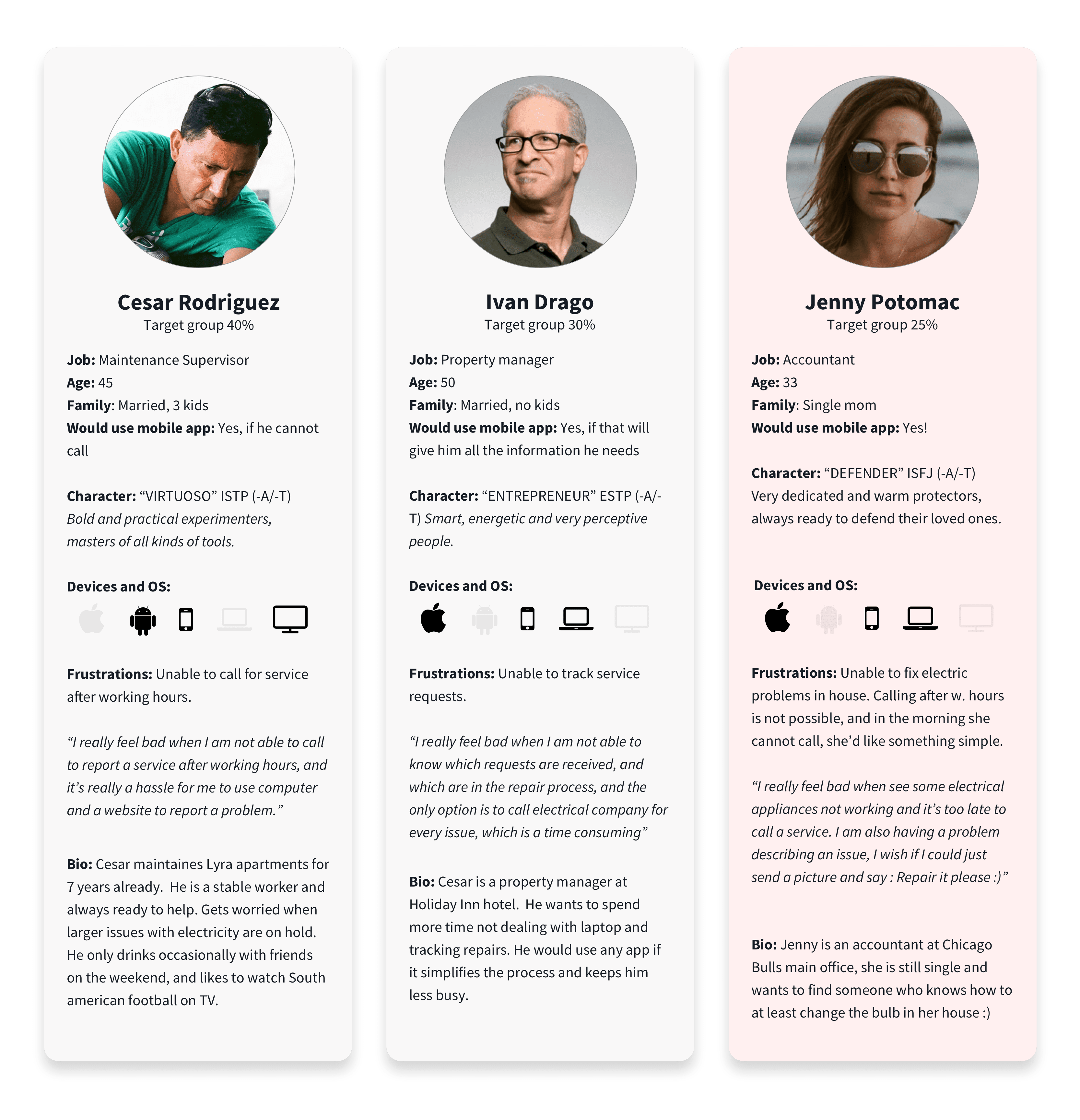
Because every user is different, we analyzed Google Analytics and talk directly to stakeholders of HLC to create detailed personas chart to pinpoint all important details for each possible end customer. User personas are presented in the picture below:
Usability testing
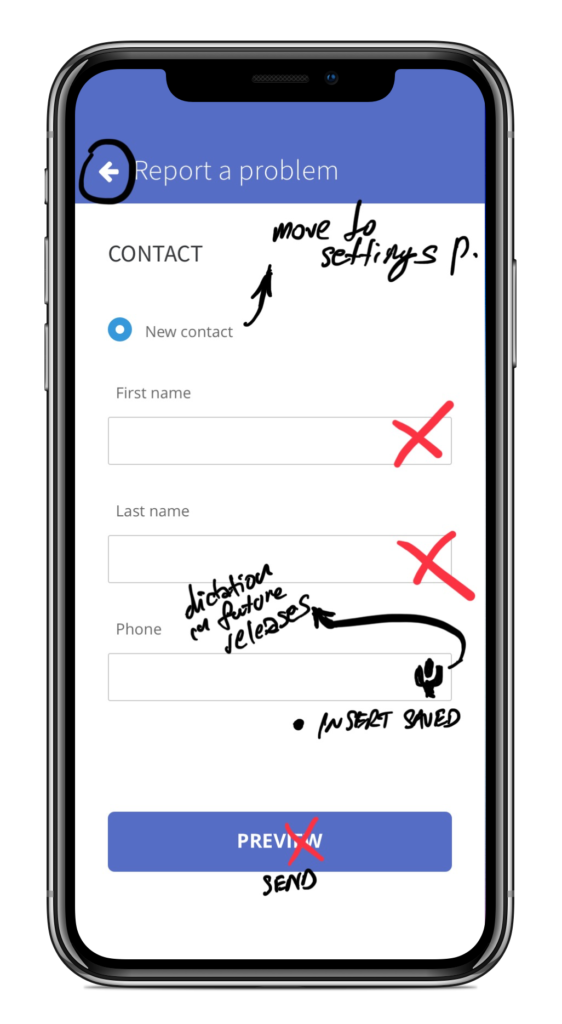
We created a quick but very detailed prototype to be tested with end users so that we get immediate direct feedback that we can implement in the next iteration. Results that we got were very positive and all issues were documented and changed in next iterations.
Analyzing user feedback and Ideate
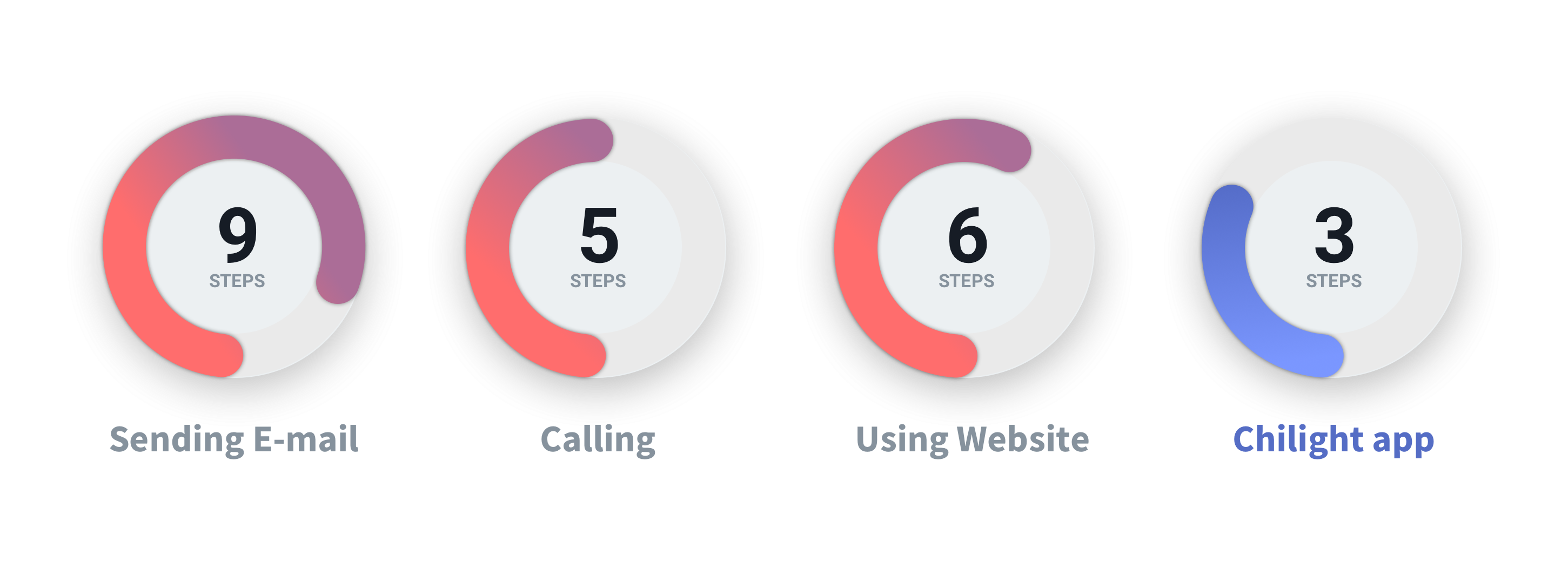
After redesigning the app, I paired with Boris Jankovic UX/UI designer to make sure we are on the right track and that led to a breakthrough solution that consisted of app flow of 3 easy steps. The crucial thing was to minimize the number of steps for a service request. You can see the comparison of steps required for the request to be received by an HLC electrician in the picture below:
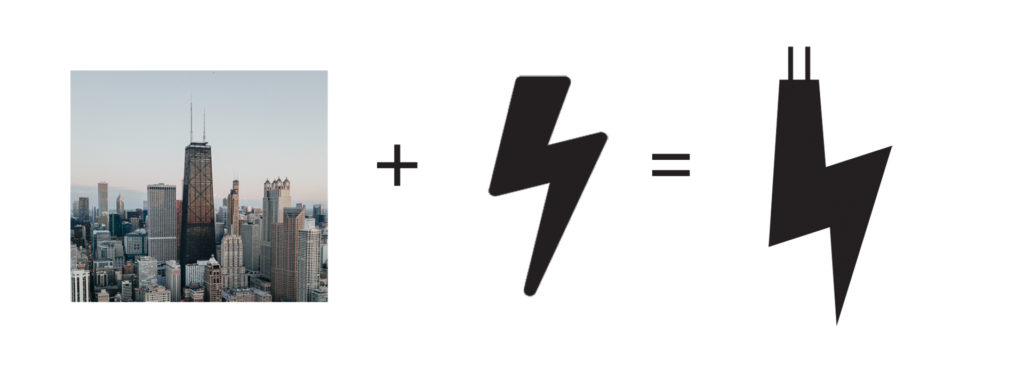
We even created a logo. For the logo creation, I used the approach based on two components: where and what. First, one (where) inspired by the Chicago landmark the famous John Hancock building which is placed at the “magnificent mile” in a downtown Chicago and it’s part of the Chicago skyline. The second one (what) represents the industry that our client is active. A universal electric icon was used as our best choice. By merging these two elements created a new one. A mark that will communicate who they are and where they are operating. My approach is logo design is: make it simple yet responsive.
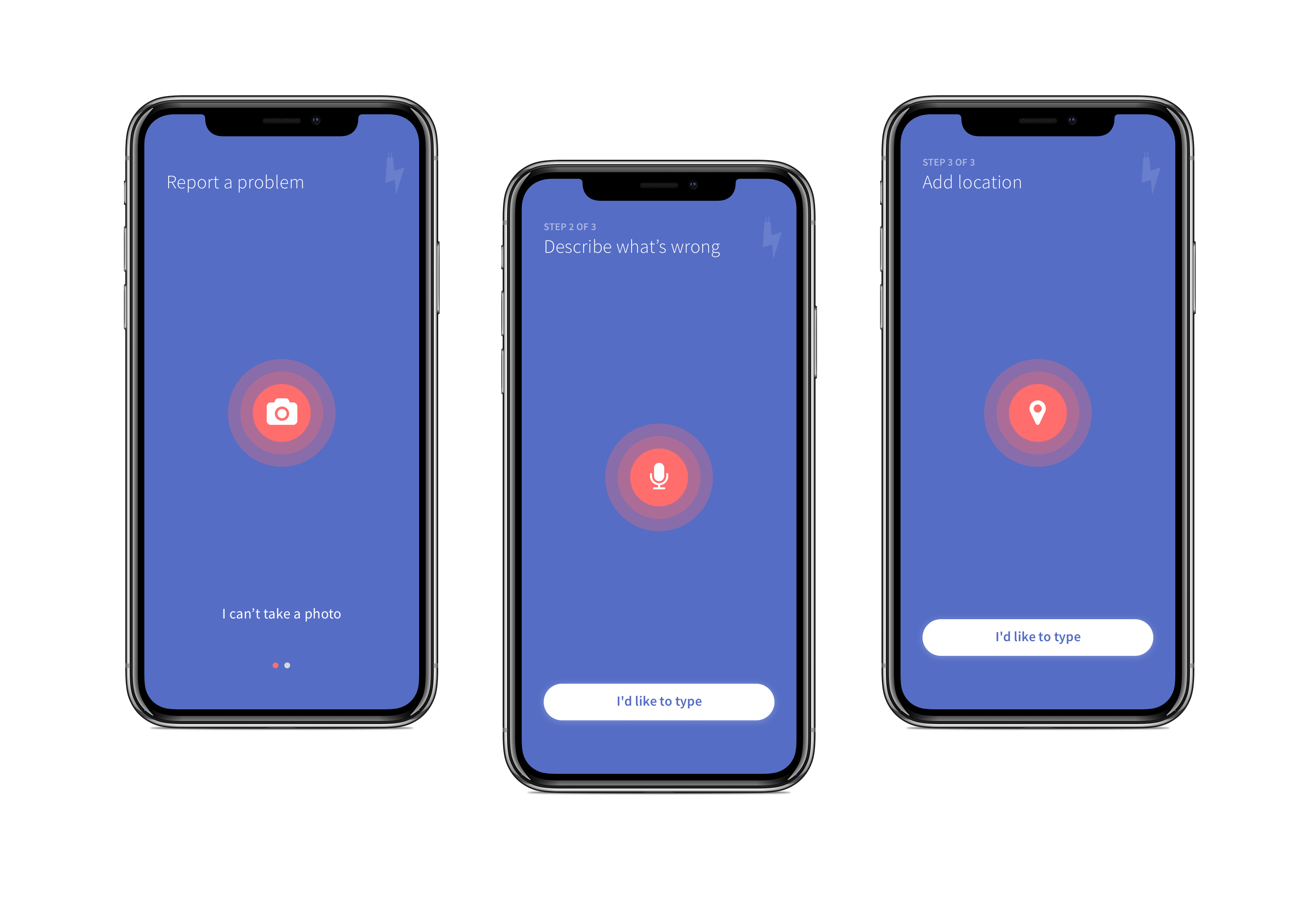
Tap and speech as main interaction methods
We wanted simplicity, and that is why we needed to innovate and make an app so simple that instead of 6 or more steps to send information from end users to electricians, which is a common flow of our competitors, we used just 3 steps to solve the same problem.
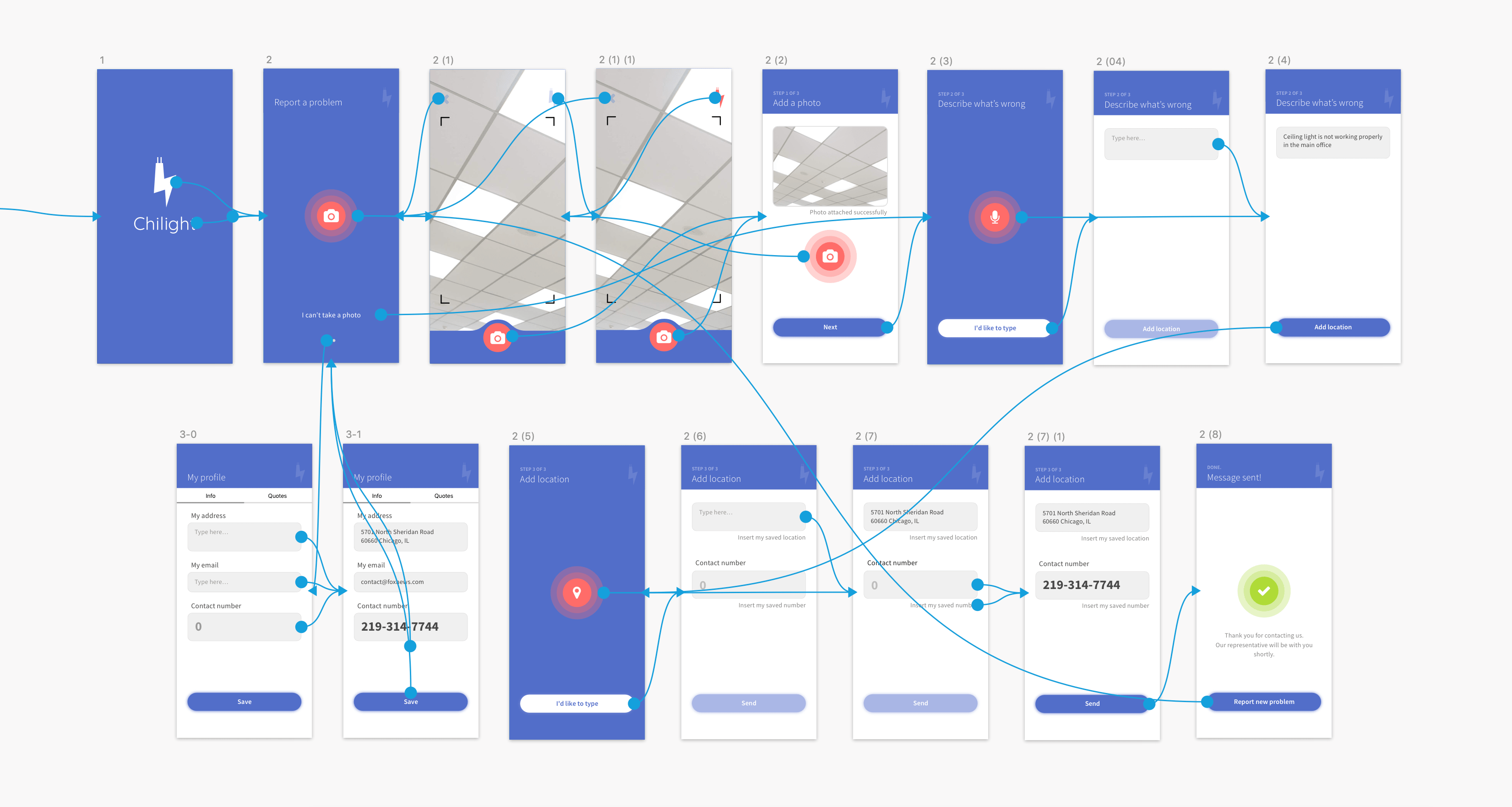
User flow
User flow is finally done and represents our solution as the most intuitive way to submit the request for service. Currently, our client is in the process of evaluation and doing additional testing before going into production.
Design delivery
The design process is done and ready for the dev handoff. We used Scrum methodology to go through every step in designing this app. Also, we were able to communicate our solution effectively with our stakeholders which helped them to track the progress and predict next steps in project planning. The final goal was to provide end users with trust in the HLC company’s vision and service.
Try it here.